




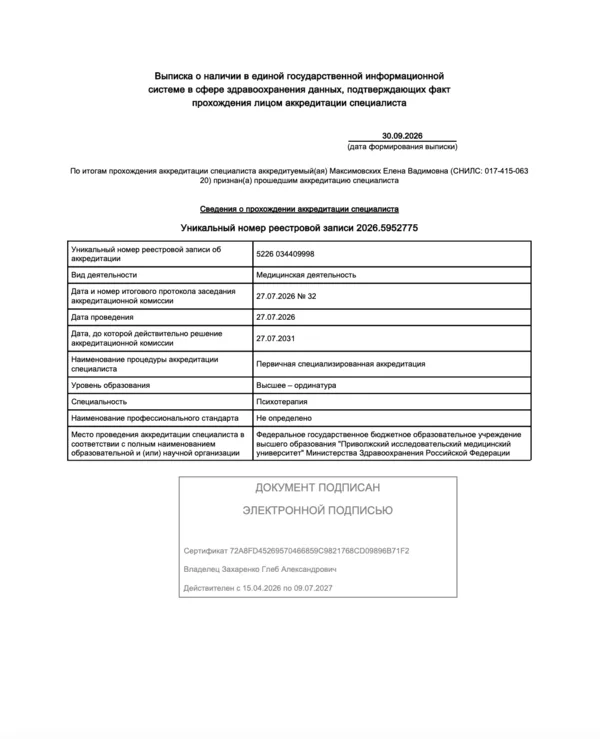




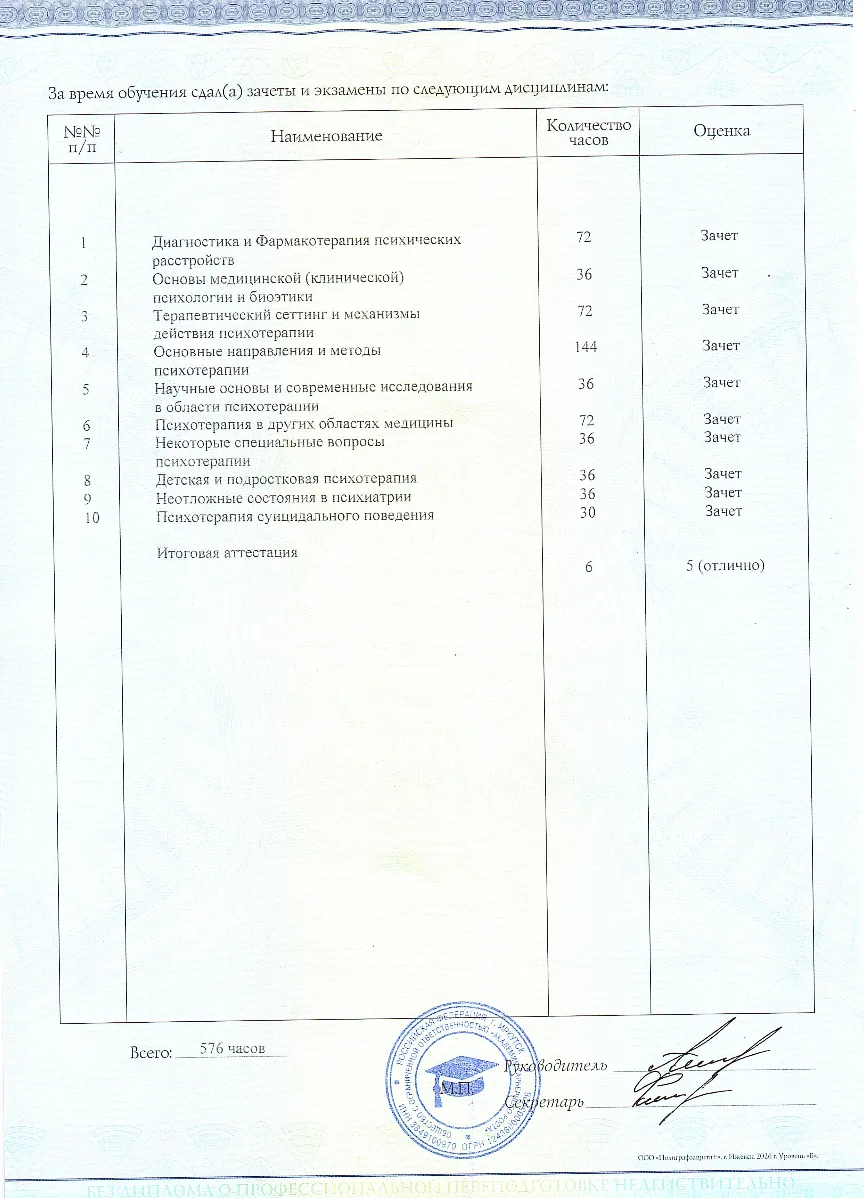
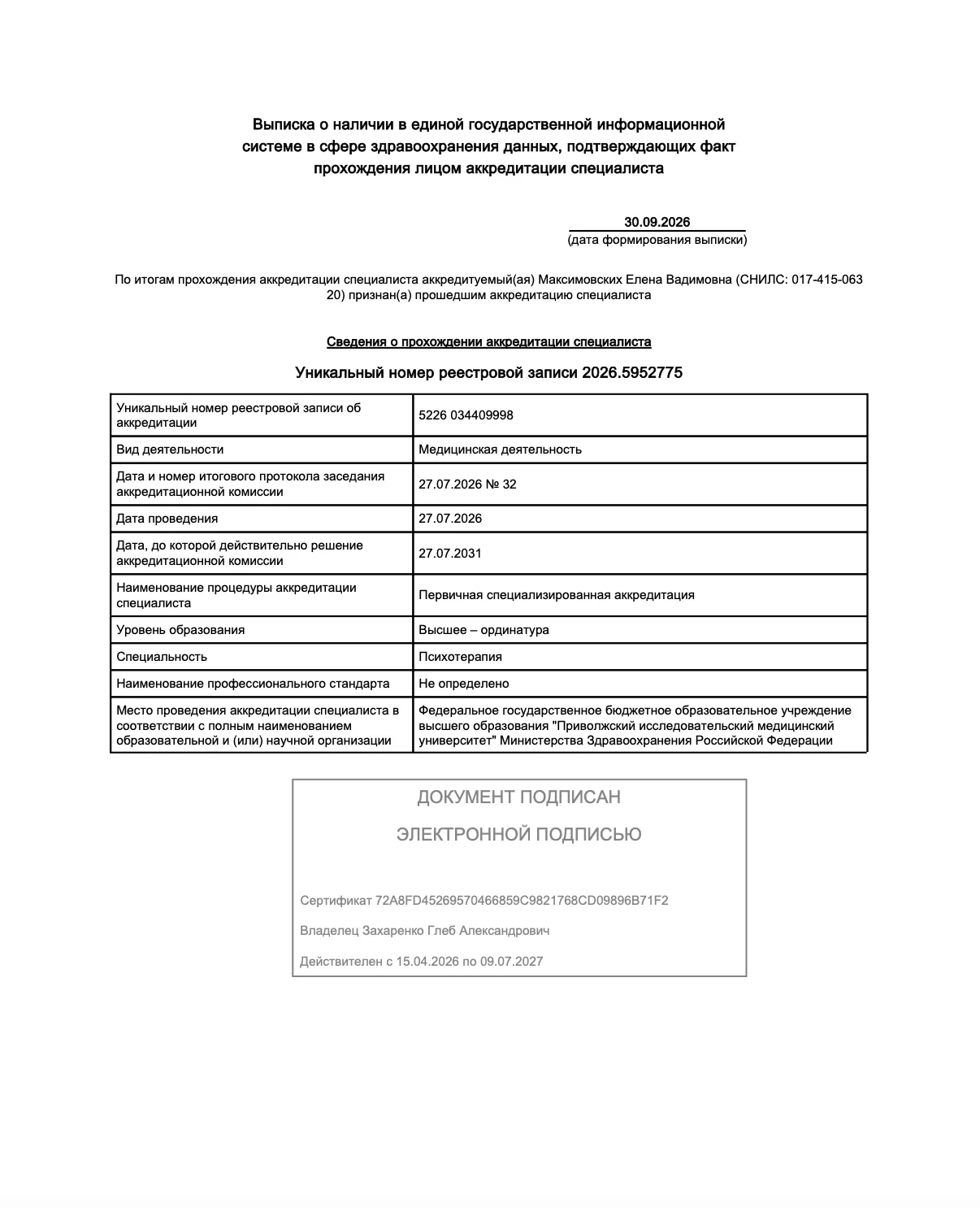

Seeing a therapist may be helpful if you notice changes in your emotional state, relationships, daily routine, or ability to cope with everyday tasks. For example:
- constant anxiety, inner tension, or a feeling of fear;
- panic attacks;
- depression, apathy, or a loss of interest in life and your usual activities;
- sudden mood swings or difficulty managing your emotions;
- obsessive thoughts or repetitive behaviors;
- sleep disturbances, difficulty concentrating;
- phobias and heightened anxiety;
- difficulties in relationships with loved ones, a partner, or coworkers;
- challenges in the professional sphere, loss of motivation, and emotional exhaustion;
- coping with loss or other significant life events;
- low self-confidence and difficulty making decisions;
- eating disorders;
- sexual difficulties;
- addiction to alcohol, psychoactive substances, medications, or gambling.
You don’t necessarily need to figure out the cause of your condition on your own or have an exact diagnosis. Sometimes it’s enough to feel that your usual ways of coping with what’s happening are no longer helping. During a consultation, we can work together to understand what’s going on and determine what kind of help you might need.
The first session is an opportunity to get to know each other. The client gets comfortable in the new setting, talks about themselves, and clarifies any questions they may have.
During this time, the psychotherapist conducts an initial assessment to evaluate your psychological and emotional state. At this stage, it is quite common to feel some tension and anxiety.
Consultation Format
Consultations take place in person at the office or online—depending on your availability and preferences.
An online session allows you to work with a psychotherapist regardless of your location, while maintaining the familiar format of one-on-one work.